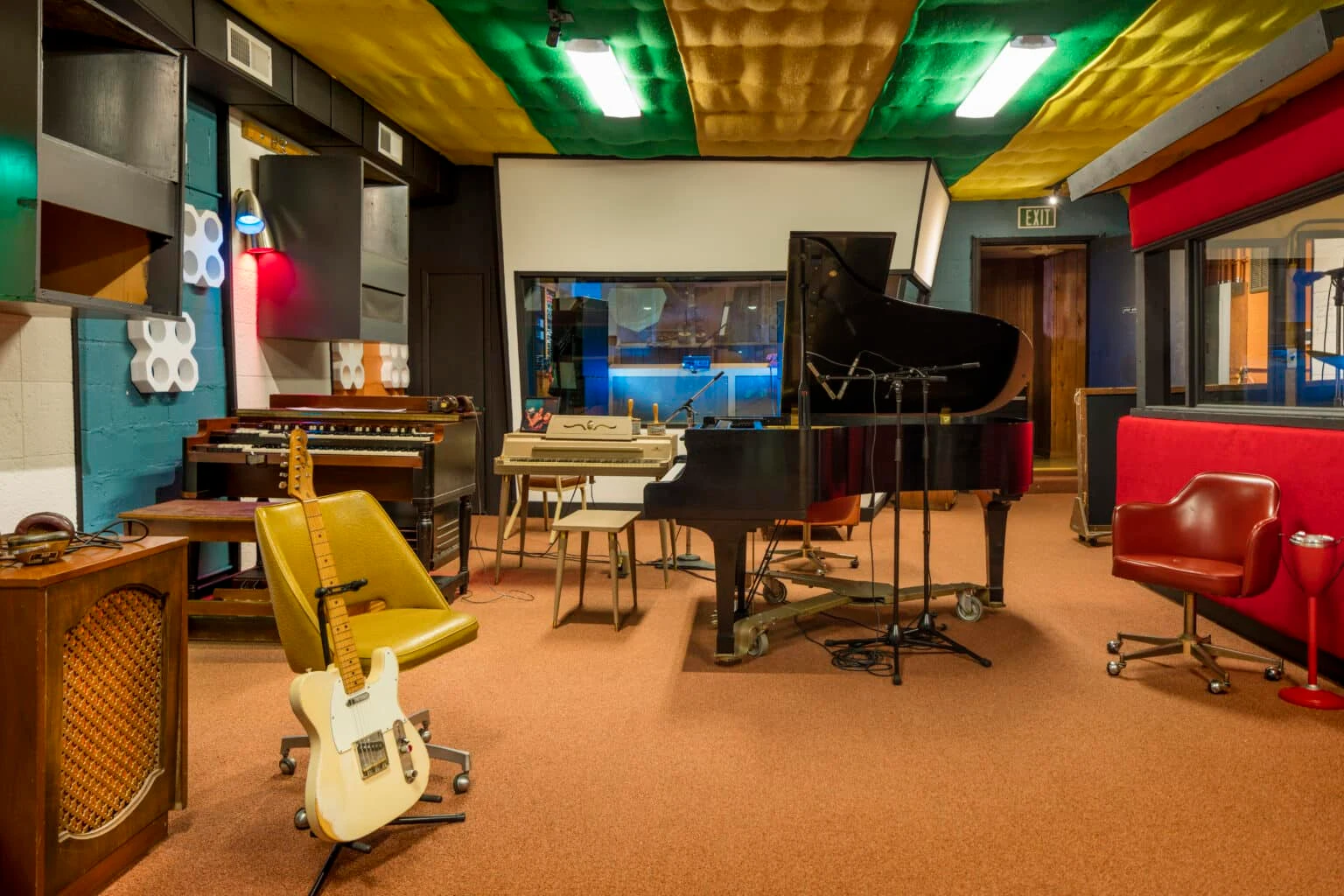
The Story of Muscle Shoals Sound Studio
How four session musicians left FAME Studios, converted a coffin showroom into a recording studio, and attracted The Rolling Stones, Bob Dylan and Rod Stewart.
The Story of Muscle Shoals Sound Studio
In 1969, four musicians from northwest Alabama did something that seemed either brave or insane. They walked away from guaranteed session work at the most successful recording studio in the region and opened their own facility in a converted coffin showroom.
Within months, The Rolling Stones were at the door.
The Four Who Left
Barry Beckett (keyboards), David Hood (bass), Jimmy Johnson (guitar), and Roger Hawkins (drums) had been the house rhythm section at Rick Hall's FAME Studios since the mid-1960s. They'd played on hit after hit — backing Aretha Franklin, Wilson Pickett, Percy Sledge, and Etta James.
But they wanted more creative control and a fairer share of the profits. So they pooled their resources and leased a building at 3614 Jackson Highway in Sheffield, Alabama. The building had previously been a coffin showroom — not the most auspicious start for a recording studio.
They called themselves Muscle Shoals Sound Studio and waited for the phone to ring.
The Stones Come Calling
It rang almost immediately. The Rolling Stones arrived in December 1969, just weeks after the studio opened. Mick Jagger and Keith Richards had heard about the Muscle Shoals sound and wanted to capture it for their next album, "Sticky Fingers."
The sessions produced three tracks: "Brown Sugar," "Wild Horses," and "You Gotta Move." The Stones were so impressed by the studio and the musicians that Jagger reportedly said it was the best rhythm section he'd ever worked with.
The Hit Parade
After the Stones, the floodgates opened:
- Bob Seger — "Old Time Rock and Roll," "Main Street," "Night Moves" sessions
- Bob Dylan — "Slow Train Coming" and "Saved" (1979-80)
- Paul Simon — "Kodachrome," "Loves Me Like a Rock" and tracks for several albums
- Rod Stewart — "Tonight's the Night"
- Lynyrd Skynyrd — multiple albums, and famously name-checked the Swampers in "Sweet Home Alabama"
- Traffic — "Shoot Out at the Fantasy Factory"
- Cat Stevens — sessions in the early 1970s
- Willie Nelson — sessions in the 1970s
- Cher — "3614 Jackson Highway" album (named after the studio address)
The Sound
What made the Muscle Shoals Sound Studio recordings so distinctive?
The groove. Roger Hawkins played with a slightly behind-the-beat feel that created an irresistible, swampy pocket. David Hood's bass locked in perfectly — solid, deep, and melodic without ever being flashy.
The room. The converted coffin showroom had unusual acoustics. The low ceiling, concrete block walls, and odd dimensions created a warm, present sound that engineers struggled to replicate elsewhere.
The musicians. The Swampers could play anything. Rock, soul, country, pop, gospel — they adapted to every artist without losing their identity. They served the song, never their egos.
3614 Jackson Highway
The address itself became legendary. Cher named an album after it. Photographers made pilgrimages to shoot the unassuming building. The black-and-white photo of the studio exterior — with its simple "3614" address numbers — became one of the most iconic images in rock history.
In 1979, the studio moved to a larger, purpose-built facility on Alabama Avenue in Sheffield. The original building sat empty for decades before being restored and opened as a museum and National Historic Landmark.
The Legacy
The Swampers' influence extends far beyond the records they played on. Their approach — tight, soulful, genre-crossing — became a template for:
- Southern rock (Lynyrd Skynyrd, The Allman Brothers)
- Americana (Jason Isbell, Drive-By Truckers)
- Modern roots music (The Black Keys, Alabama Shakes)
David Hood still lives in the Shoals area. His son, Patterson Hood, co-founded the Drive-By Truckers, carrying the family's musical legacy into the 21st century.
Visit the Studio
Travelling Time runs escorted tours visiting the Muscle Shoals Sound Studio and the wider Shoals area. Our tour managers bring the stories to life — from the night the Stones arrived to how Dylan chose Muscle Shoals over Nashville.
Tours featuring Muscle Shoals Sound Studio:
Browse all tours → | Read more about Muscle Shoals →
You Might Also Enjoy
- Inside FAME Studios — Where it all began
- How the Swampers Changed Music — The rhythm section behind the hits
- Guide to the Muscle Shoals Sound — What made the sound unique
- FAME Studios Tour Guide — What to expect when you visit
- Top 10 Music Landmarks in Muscle Shoals — Every landmark worth visiting
View Travelling Time Tours which feature Recording Studios
Mountains, Moonshine & Music City
9 Nights • From £2,199 (Tour Only)
Music Cities - Southern Style
14 Nights • From £3,149 (Tour Only)
The Ultimate American Music Tour
15 Nights • From £3,149 (Tour Only)
Memphis, Mountains & Music Cities
11 Nights • From £2,649 (Tour Only)

Country, Capitals, Jack & Coke
10 Nights • From £1,929 (Tour Only)
The Gala Tour
10 Nights • From £3,299 (Tour Only)
Meet The Music Makers
10 Nights • From £1,779 (Tour Only)
Music 'N' Motion
10 Nights • From £1,779 (Tour Only)
Soundtrack of the South
13 Nights • From £2,549 (Tour Only)
Southern Style
12 Nights • From £2,499 (Tour Only)